

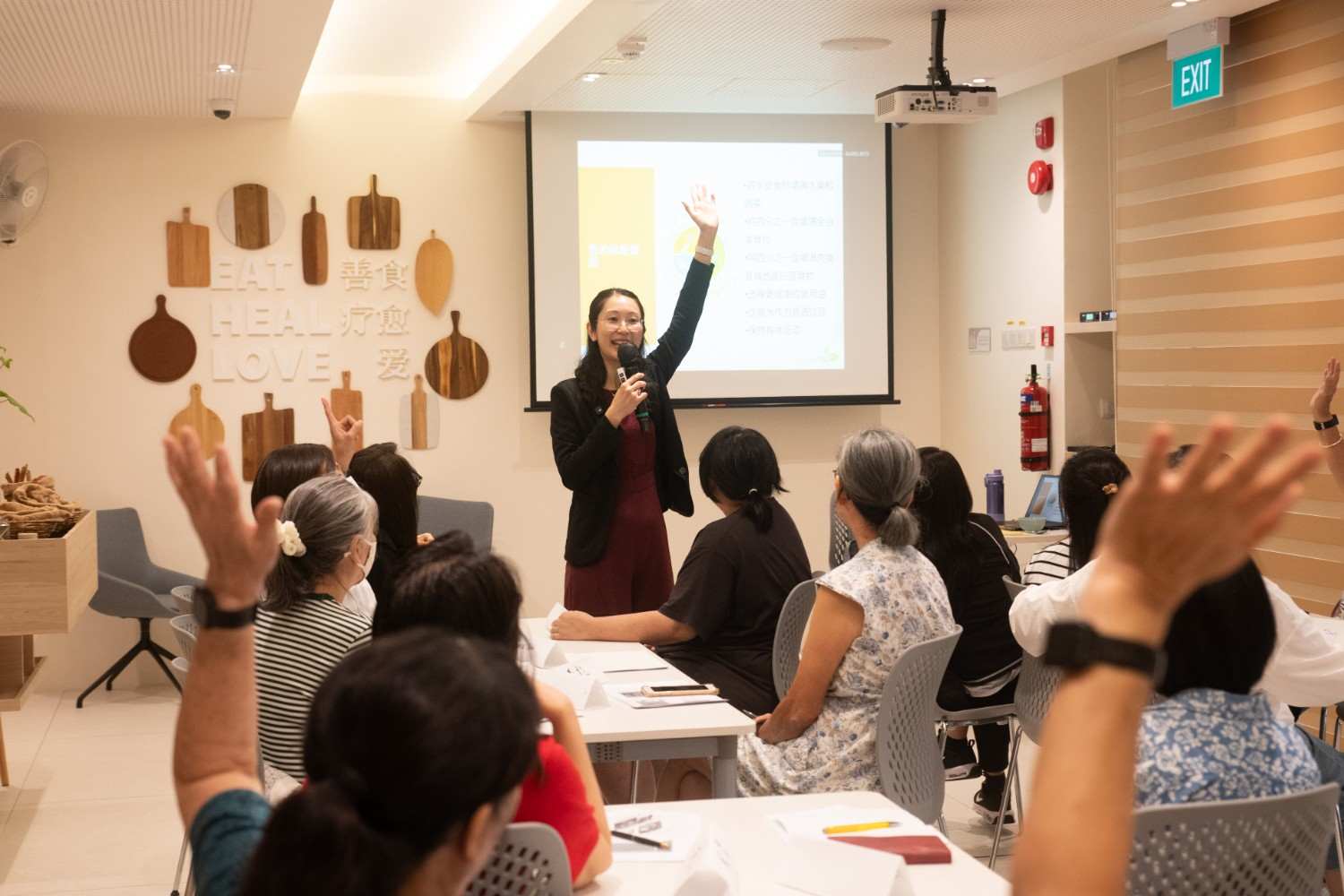
A nutrition workshop or talk in Singapore is a facilitated group session, delivered in person or online, that teaches practical and evidence-based eating habits to employees, community groups, or individuals.
These sessions have become a popular way for companies and organisations to support staff wellbeing without committing to a full one-on-one coaching programme. They typically run for one to two hours and are led by a qualified dietitian rather than a general wellness coach.
For groups that want more than a single session, a talk is often the first step towards a longer wellness partnership.
What Happens During a Nutrition Workshop or Talk
Most sessions open with a short overview of how everyday food choices affect energy, focus, and long-term health. From there, the facilitator usually moves into a more interactive segment, often involving a supermarket-style walkthrough of common food labels or a group discussion about typical Singaporean meals. The goal is not to hand out a generic meal plan, but to help attendees recognise patterns in their own eating that they can realistically adjust.
A well-run talk also leaves room for questions specific to the audience in the room. A group of new parents will ask different things than a group of office workers managing long hours and frequent takeaway meals, and a good facilitator adapts the examples accordingly rather than reading from a fixed script. Some providers also send a short summary handout afterwards so the key points aren’t lost once the session ends.
Who Should Consider Booking a Nutrition Workshop
Companies and HR Teams
Workplace nutrition talks are usually booked as part of a broader employee wellness calendar, alongside things like mental health talks or fitness challenges.
They work well because they need very little organisation from HR beyond booking a room or a video call link, and they give staff something concrete and practical rather than another slide deck to skim. Many HR teams book a talk first to gauge interest before committing to a longer programme.
Community Groups and Schools
Grassroots organisations, religious groups, and parent-teacher associations also book nutrition talks, often around specific themes such as helping children eat better or managing family meals on a budget. These sessions tend to run a little longer and allow more time for open discussion than a corporate lunchtime talk would, since attendees are often there voluntarily and more inclined to ask personal questions.
Active Ageing Centres (AACs)
Active Ageing Centres (AACs) may engage nutritionists to conduct talks that help older adults make informed food choices and maintain a healthy lifestyle as they age. These sessions can cover topics such as balanced eating, adequate protein intake, hydration, maintaining muscle strength, and managing common age-related nutritional concerns. Nutritionist-led talks provide seniors with practical, evidence-based guidance on how to eat well using familiar Singaporean foods and everyday meals.
A good nutrition workshop or talk in Singapore usually covers:
- How to read a nutrition label without needing a calculator
- Simple swaps for common Singaporean dishes, from hawker meals to home-cooked favourites
- How portion size affects blood sugar and energy levels through the day
- Practical tips for eating well while eating out or ordering delivery
- How to build a balanced plate without following a strict diet
- Common myths around carbohydrates, fats, and “clean eating” trends
How to Choose the Right Nutrition Workshop Provider
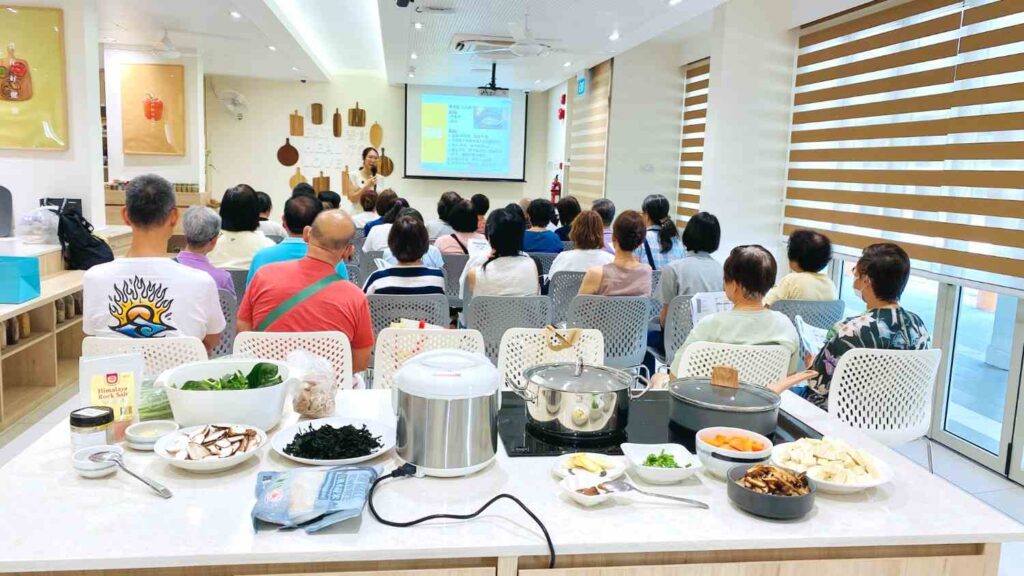
The most important thing to check before booking is whether the session is actually led by a registered dietitian, rather than a wellness influencer or a supplement brand running a talk to sell products. A dietitian’s training means the advice given is grounded in clinical nutrition science rather than trends, and any dietary claims made can be backed up if a participant asks a more detailed question afterwards.
It is also worth asking how the content will be adapted for your specific group. A session designed for a factory floor with shift workers should look different from one for a desk-based finance team, and a provider who cannot describe that difference in advance is more likely to deliver a one-size-fits-all talk. Ask to see a sample outline before confirming a booking if this matters to your group.
Finally, consider whether you want a single talk or the start of an ongoing relationship. Some providers only offer one-off sessions, while others can scale a single talk into a structured, multi-session programme if the first one goes well.
What Makes Healthier U’s Approach Different
Healthier U’s nutrition workshops and talks are led directly by dietitian Hui Xin, and are built around real Singaporean meals rather than imported, Western-style diet templates.
Sessions can be run as a one-off talk or bundled into a longer corporate or community wellness programme for groups that want ongoing support rather than a single session, with the same dietitian carrying context from the first talk into any follow-up work.
Frequently Asked Questions
Most nutrition workshops and talks in Singapore run for one to two hours, depending on how much time is set aside for questions. Corporate lunchtime sessions tend to sit at the shorter end, while community and school sessions often run closer to two hours to allow for open discussion.
Yes, nutrition talks can be delivered online just as effectively as in person, particularly for companies with staff working across multiple office locations. The main trade-off is that interactive segments, such as a label-reading exercise, need to be adapted slightly for a screen-based audience.
A nutrition workshop can typically accommodate anywhere from a handful of participants up to a full department or community group of fifty or more. Larger groups usually mean less time for individual questions, so providers often recommend a follow-up Q&A slot for bigger audiences.
No preparation is required for most nutrition workshops, though some providers ask participants to bring a food label or packaging from something they eat regularly. This turns the session into a more concrete, hands-on exercise rather than a purely theoretical talk.
A general nutrition workshop is designed for a broad audience and covers foundational, low-risk eating principles rather than condition-specific medical advice. Anyone managing a specific health condition, such as diabetes or high cholesterol, is better served by a one-on-one consultation where their situation can be reviewed individually.
Most providers recommend booking a nutrition talk at least two to three weeks in advance, particularly if the session needs to be customised for a specific audience or theme. Popular slots around the start of the year, when many companies run wellness kick-off events, tend to fill up faster.
A nutrition talk is a single, standalone session, while a wellness programme bundles several sessions together, often alongside individual consultations or ongoing check-ins. Groups that book a talk first and see strong engagement often move on to a programme in the following quarter.
If your organisation is exploring nutrition talks as part of a wider wellness plan, Healthier U also offers structured wellness programmes for teams that want more than a single session.
Questions about booking a workshop or talk can be sent through the contact page, and general nutrition questions are also covered on the practice’s FAQ page.